
International Coastal Cleanup: A Day to Turn Trash Into Change
Have you ever heard of the “International Coastal Cleanup Day”? I first learned about this beach cleanup event during my first year of college, in September 2013, when a group of students from our Environmental Engineering department was looking for volunteers to help remove trash from nearby beaches. I instantly thought it was a great initiative, and signed up together with a friend. The event ended up being my first volunteer experience and a wonderful lesson in the power of restorative environmental action.
Years later, I came to realize that this global beach cleanup effort is far bigger and more organized than I had initially thought. At first glance, it might look like any other shoreline cleanup, but the impact goes far beyond picking up litter.
So, what exactly is the International Coastal Cleanup, and what sets it apart? In this article, we’ll break down how this global event works, the impact it’s had worldwide, and when and how you can join!
What Is the International Coastal Cleanup?
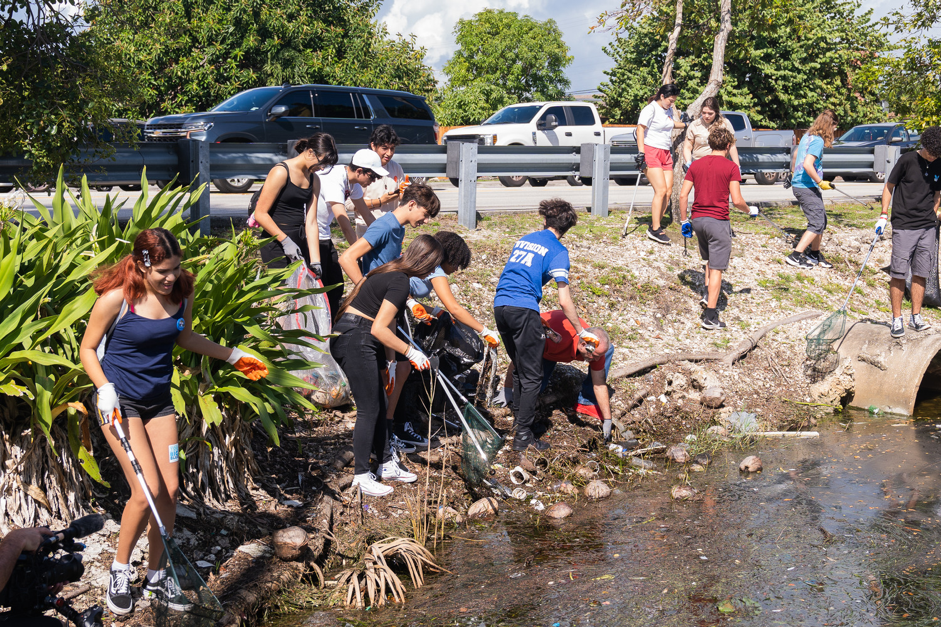
The International Coastal Cleanup (ICC) is a global volunteer event organized by Ocean Conservancy, a U.S.-based nonprofit environmental advocacy group. Each year, on the third Saturday of September, thousands of volunteers around the world come together to remove trash from beaches and waterways while gathering data to fight plastic pollution. In its 35+ years since its founding, the Ocean Conservancy cleanup has become the world’s largest volunteer effort for ocean health. At this international event, people collect trash as well as data to help reduce plastic pollution, protect marine life, and support healthy oceans.
When Did the International Coastal Cleanup Start?
Love them or hate them, plastics have been at the center of the debate since their invention. Back in 1986, an Ocean Conservancy worker—Kathy O’Hara—was already working on a groundbreaking report called “Plastics in the Ocean: More than a Litter Problem.”
Her Ocean Conservancy colleague, Linda Maraniss, was inspired by Kathy’s pioneering work on the report. Together, they reached out to the Texas General Land Office, local businesses, and other volunteers to plan the first Ocean Conservancy cleanup, which laid the groundwork for what we know today as the “International Coastal Cleanup.”
Working closely with partners has been central to the initiative’s success from the start. Even though it was the NGO’s first coastal cleanup event, Kathy and Linda managed to bring together 2,800 volunteers in Texas and collect about 124 U.S. tons of litter!
Since then, the event has grown year after year, both nationally and internationally.
Global Impact Through Local Partnerships
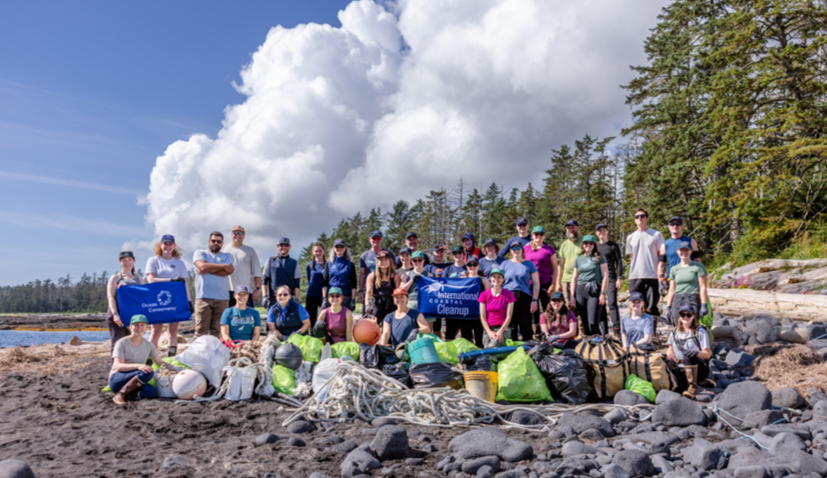
The best part about the Ocean Conservancy cleanup is how it has been able to connect communities around the globe for a common purpose: supporting healthier oceans.
Though it’s organized by Ocean Conservancy, it wouldn’t be possible without the support of hundreds of partner organizations coordinating shoreline cleanups and encouraging people to participate. It’s a shared effort between governments, local NGOs, scientists, schools, businesses, and volunteers to keep our waterways clean.
In my home country, Venezuela, there’s one NGO that coordinates directly with Ocean Conservancy, and then teams up with local NGOs in each state to organize the cleanups. These local groups designate different locations, so you can choose the nearest cleanup site and show up knowing someone will be there to guide the activity. Local businesses, on the other hand, often help out with food, drinks, trash bags, and other basics for the day.
How Big is the International Coastal Cleanup?
The Ocean Conservancy’s International Coastal Cleanup reaches nearly every corner of the planet, from Arctic coastal communities to far-southern shorelines in the Southern Hemisphere, transcending language barriers, cultural differences, and national borders.
With four decades of action and participation from millions of volunteers across more than a hundred countries, the International Coastal Cleanup is one of the most extensive and longest-running environmental initiatives in the world.
Since 1986, the cleanup has evolved from a small effort into a global movement marked by impressive milestones:
More than 19 million volunteers around the world have participated in the Ocean Conservancy beach cleanup.
Coastal cleanup volunteers have collected more than 400 million pounds of trash.
In 2019, the International Coastal Cleanup achieved a Guinness World Record for the “largest annual coastal clean-up project.” The event brought together 943,195 volunteers from 116 countries, who removed 9,422,199 kg (20,772,394 lb) of trash from 39,358 km (24,456 mi) of coastline in a single day.
The ICC has taken place every year since it began, even through challenging times like the COVID-19 pandemic. That said, the 2020 cleanup was held a bit differently to accommodate safety measures. During that year, the NGO encouraged volunteers to carry out cleanups with only members of their household.
Building on decades of impact, Ocean Conservancy’s latest report reveals the results of the most recent cleanup:
486,706 volunteers in over one hundred countries participated.
Shoreline cleanup volunteers collected 7,467,721 pounds of trash—about the weight of 4,000 beluga whales!
Volunteers collected 17,820,206 items during the cleanup, with just enough food wrappers to give a snack to every fan for 72 games at Madison Square Garden.
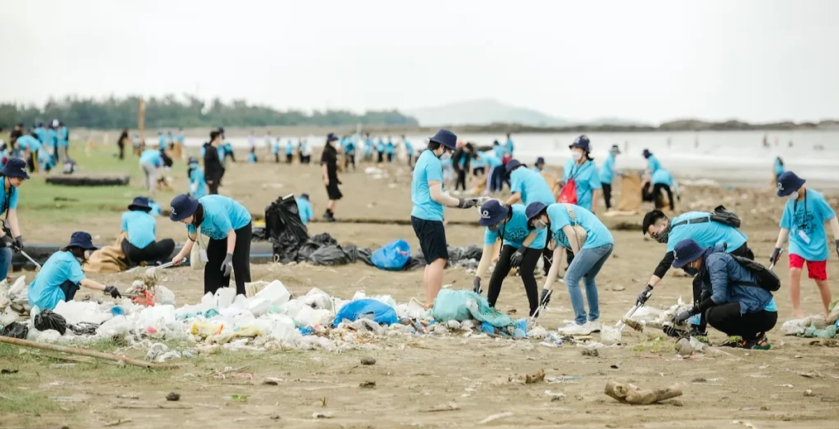
While individual efforts have their benefits, organized cleanups offer many advantages too.
The International Coastal Cleanup offers a great opportunity to be part of a global environmental movement, contribute to a shared effort for cleaner oceans, meet like-minded people, and even encourage friends and family to join in. And if local conditions allow, you could even enjoy some time in the water afterward!
Additionally, what volunteers do at this global beach cleanup has an impact that extends well beyond the event.
Why the International Coastal Cleanup is More Than Just a Beach Cleanup
From the very beginning, the International Coastal Cleanup has set itself apart from conventional cleanups through its standardized, global methodology.
During the event, volunteers play a dual role: cleaning up marine debris and recording every item collected in a standardized framework, from cigarette butts and food wrappers to plastic straws and everything in between. This makes the International Coastal Cleanup both a global effort to remove plastic waste and a large-scale citizen science project.
Thanks to this collective effort over the years, Ocean Conservancy has been able to build the world’s largest database on ocean plastic pollution. This is a gold mine for scientists, policymakers, and other organizations seeking reliable data to:
Track the most prevalent marine debris items
Study pollution trends over time
Fuel environmental research
Strengthen the case for policy change
Push companies toward more responsible practices
In other words, volunteers help keep waterways clean while supporting data-driven solutions to prevent pollution in the first place.
The Waste Data Collection Process for Cleanup Volunteers
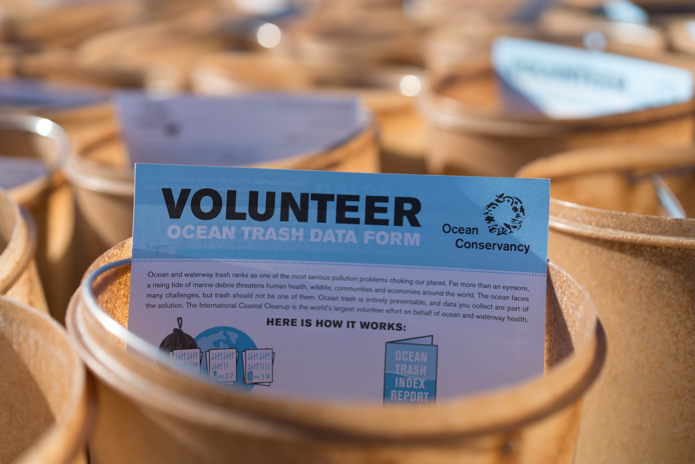
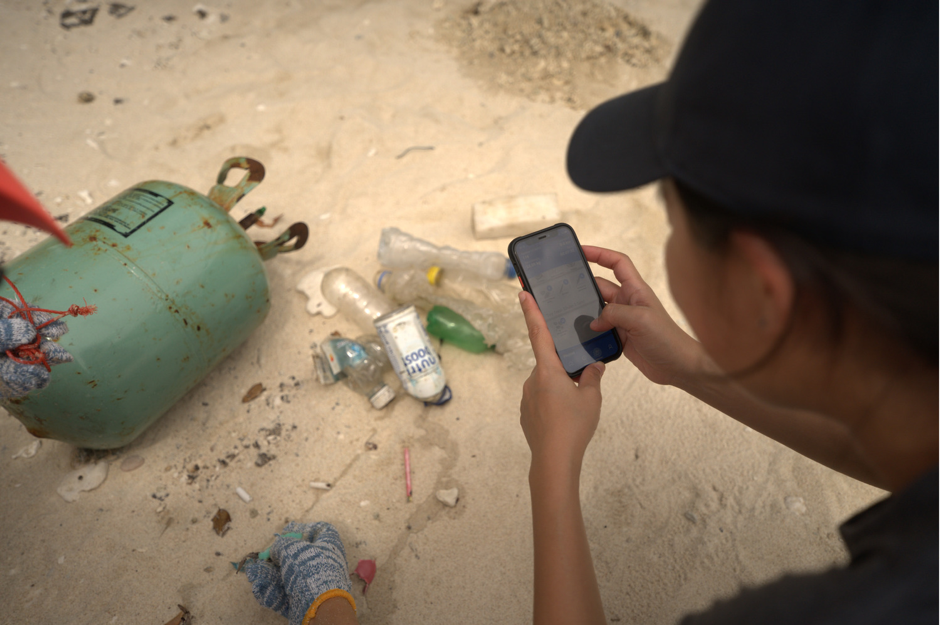
There are two ways to collect marine debris data: using Ocean Conservancy’s standardized data sheet or the Clean Swell® mobile app.
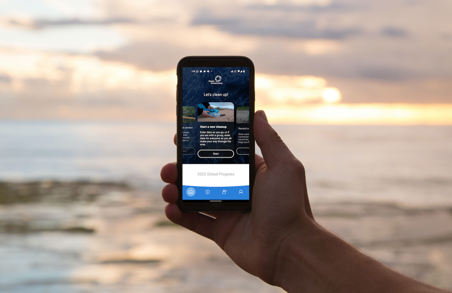
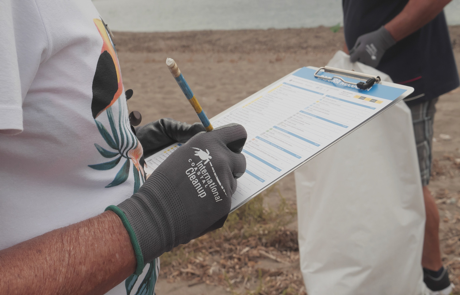
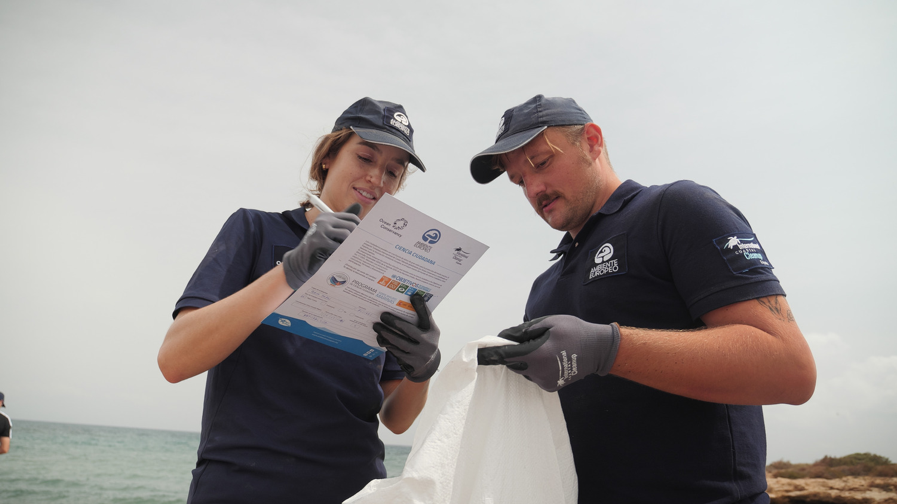
Before the cleanup begins, local coordinators typically organize volunteers in small groups. To make things easier, each group receives a single data sheet to fill out. Alternatively, volunteers can use the mobile app to record all the collected items digitally.
Next, the organizers will take a few minutes to explain to volunteers how to record marine debris in their preferred data collection method.
A few months after the event, Ocean Conservancy will publish the International Coastal Cleanup report, which summarizes all the data collected by volunteers around the world.
In my experience, tracking every item the group collects can slow everyone down a bit, so it helps if one person is responsible for recording while the others focus on the cleanup.
Although it may feel tedious—especially when there’s a lot of trash to record—the information volunteers gather is invaluable for understanding marine pollution both locally and globally. So, it’s definitely worth it!
How Volunteer Data Shapes Ocean Protection Efforts
ICC data has been more than just a few nice numbers on paper. Far from sitting in a database, Ocean Conservancy's marine debris data has fueled scientific research, with 43 peer-reviewed publications citing it.
Alongside scientific research, ICC data has also been leveraged to promote policies that ban or reduce single-use plastics, including:
● California’s SB 54 - Also known as the Plastic Pollution Prevention and Packaging Producer Responsibility Act. This law requires producers to cut single-use plastic packaging and foodware by at least 25% by 2032. This reduction is expected to prevent around 23 million tons of single-use plastics over the next decade.
● The Florida Balloon Release Ban - A law that prohibits the intentional release of balloons, even those previously considered as “biodegradable.” The Florida Balloon Release Ban officially classifies balloons as litter, penalizing intentional releases with a $150 fine.
● The Farewell to Foam Act - A bill that seeks to prohibit the sale and distribution of single-use plastic foam foodservice products.
Beyond policy change, Ocean Conservancy’s database has also been useful for tracking the effectiveness of existing policies, such as Washington, D.C.’s foam ban.
For example, ICC data reveals that plastic foam foodware pollution on beaches and waterways dropped by 95% in the District since the ban went into effect!
What Is The Trash Most Commonly Found on Beaches?
Single-use plastics are the most common type of trash found during beach cleanups.
The latest reports from Ocean Conservancy’s International Coastal Cleanup—the world’s largest annual coastal cleanup—show that food wrappers, plastic beverage bottles, cigarette butts, and plastic bottle caps have been the most commonly collected items worldwide in the past few years.
Here are the top items collected during the most recent International Coastal Cleanup day:
Global Top 10 Items Collected (2024)
Food wrappers (candy, chips, etc.) 1,442,860
Beverage bottles (plastic) 1,284,225
Cigarette butts 1,227,124
Bottle caps (plastic) 979,400
Food containers (plastic) 523,998
Other bags (plastic) 480,371
Grocery bags (plastic) 468,394
Cups, plates (paper) 44,485
Cups, plates (plastic) 436,397
Food containers (foam) 404,636
And that’s without even counting small pieces of plastic and foam fragments. In 2024, coastal cleanup volunteers found 4,054,338 pieces of “tiny trash.”
Although these items are consistently among the top global polluters, they can vary slightly by country based on local habits and waste management practices.
In the U.S., these items topped the list during the most recent ICC day:
United States Top 10 Items Collected (2024)
Cigarette butts 388,738
Bottle caps (plastic) 218,988
Food wrappers (candy, chips, etc.) 178,572
Other waste (metal, paper, etc.) 131,341
Beverage bottles (plastic) 129,561
Other plastic waste 114,712
Beverage cans 78,057
Straws/stirrers (plastic) 67,961
Other bags (plastic) 57,902
Beverage bottles (glass) 56,437
While volunteering at the International Coastal Cleanup in my city, Puerto La Cruz, I noticed that lollipop sticks have become a major local concern, alongside the usual food wrappers and cigarette butts. During the beach cleanup, my family and I were incredibly surprised by how many lollipop sticks we picked up. As my mom pointed out, “the cleanup really changes the way you think about items you’d normally overlook.”
Why Does So Much Plastic End Up on the Beach?
While some of these items may have been intentionally dropped on the beach, most were likely swept in by waterways or blown in by the wind. Unlike durable goods, single-use items are designed to be discarded after just a few seconds of use and many aren’t recyclable, so they often pile up in the environment.
What About Unusual Items?
ICC data sheets help volunteers easily track the most commonly found items during beach cleanups. But as you can imagine, cleanups sometimes come with a few unexpected finds. That’s why ICC data sheets have a dedicated section for “most unusual item collected,” which in my case was a hairbrush—but that’s nothing compared to what others have found.
Some of the weirdest recorded items include a fire hydrant, a garden gnome, an ironing board, a bathtub, a bird bath, a unicycle, a fire extinguisher, bowling pins, toilet seats, wigs, a tire from the 1920s, a soda bottle from the 1950s, and a beer can from the 1970s.
Is the International Coastal Cleanup Only for Beaches?
No, the International Coastal Cleanup goes beyond just beaches. Even though beaches are the most common cleanup sites, volunteers also collect trash along rivers, lakes, and other waterways worldwide. While most cleanups occur on land, some volunteers choose to remove debris underwater or from boats in deeper waters to target hard-to-reach areas.
How to Join the International Coastal Cleanup
The International Coastal Cleanup happens every year on the third Saturday of September.
If you’d like to volunteer, follow these simple steps:
Check Ocean Conservancy’s map to find a coordinator planning a cleanup in your region.
Spread the word about the International Coastal Cleanup and encourage others to participate as well.
Download Conservancy’s data collection app, Clean Swell®, to record the items you and your group collect during the cleanup.
Alternatively, you can start your own cleanup! Just pick a location, recruit friends and family, download the Clean Swell® app, and prepare for your cleanup.
How to Prepare for a Beach Cleanup
For a safe, stress-free beach cleanup, it’s important to take a few considerations in mind before the big day, such as:
Gear & Clothing Recommendations
Footwear: Prefer sturdy, closed-toe shoes.
Clothing: Wear comfortable clothes, preferably long pants and long-sleeved shirts for protection against sun, sand, insects, twigs, and sharp objects.
Accessories: Wear gloves to protect your hands while picking up litter. Additionally, you could use a hat and sunglasses for sun protection.
Safety Tips
Bring a reusable water bottle and drink plenty of water throughout the event.
Use reef-safe sunscreen to protect your skin from the sun.
Take hand sanitizer with you - and use it!
Be careful around rocky areas, surface roots, driftwood, etc.
Bring a first-aid kit in case of minor cuts and scrapes.
Use litter grabbers to collect trash without bending over.
Handle Sharp Objects Safely
Bring a wide-mouth container with a tight screw lid, such as a protein powder container, to safely collect sharp objects—like syringes and broken glass—during the cleanup.
But more importantly, avoid picking up hazardous waste beyond your skill level.
Save the Date and Join!
Want to do your part to fight plastic pollution and keep our oceans clean?
Join thousands of volunteers around the world each September during Ocean Conservancy’s International Coastal Cleanup. With just a few hours of your time, you can contribute to one of the largest efforts to remove marine litter and find solutions to tackle ocean plastic pollution directly at its source.
The International Coastal Cleanup shows what’s possible when we all come together for a shared goal. Invite your friends and family to get involved and contribute to healthier oceans!
References
● Ocean Conservancy. (2025, October 10). Cleanups & ICC - Ocean Conservancy
● Ocean Conservancy. (2025c, October 21). Cleanup Reports - Ocean Conservancy
● Largest annual coastal clean-up project. (2020, November 9). Guinness World Records
● Van Hollen, Huffman introduce bicameral resolution recognizing the 40th anniversary of the International Coastal Cleanup | U.S. Senator Chris Van Hollen of Maryland. (2026, January 27). Chris Van Hollen